National Ideas Competition 'Emerging Habitats' 2020
The National Ideas Competition 'Emerging Habitats' in Argentina was a call made by the National Government through the Ministry of Territorial Development and Housing and the Ministry of Environment and Sustainable Development. It invited university students, teachers, and researchers from the country to submit design proposals for the construction of environmentally efficient housing that could be built in emergency situations. Launched in the context of the COVID-19 emergency, the initiative aimed to create spaces for integration among civil society, academia, and the public sector for the design and formulation of initiatives in the housing and habitat sector, contributing to the generation of exchange opportunities for co-generating knowledge and collective training in the field of housing at the national level.
Location - Argentina
Year - 2020
Type - Competition Proposal
Recognition - First Honorable Mention
Scope - Collaborative Competition Project
Year - 2020
Type - Competition Proposal
Recognition - First Honorable Mention
Scope - Collaborative Competition Project
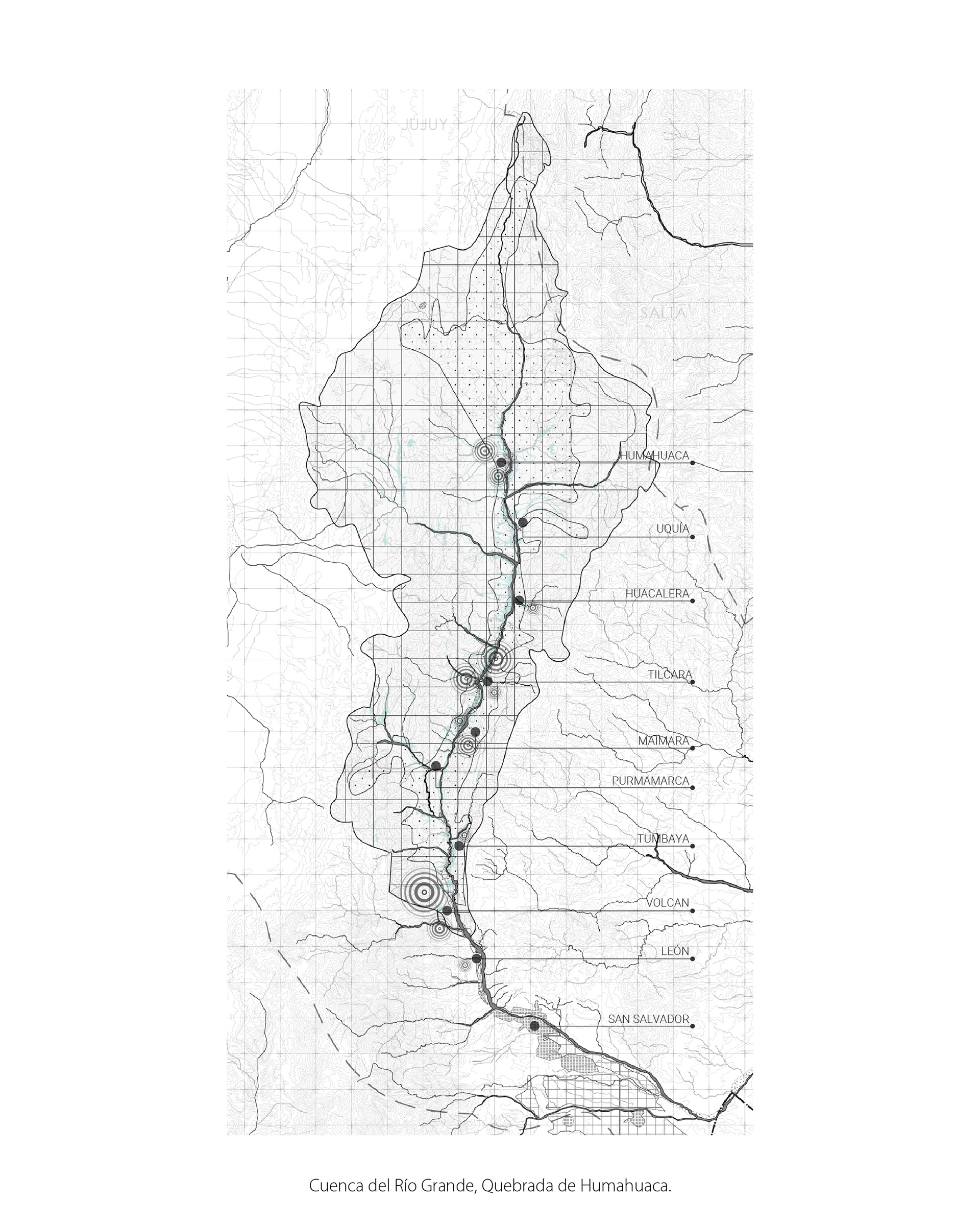
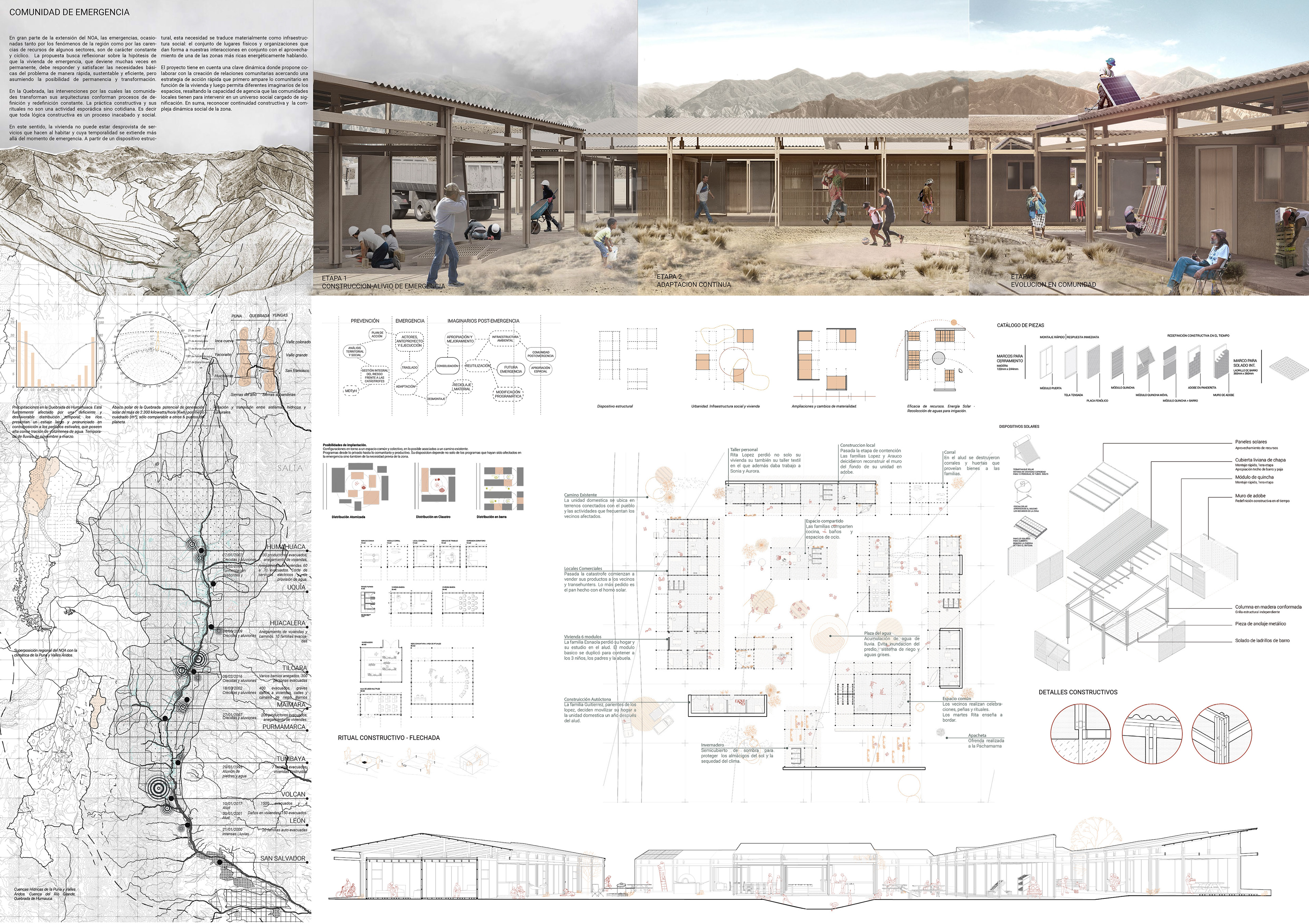
In much of the NOA region, emergencies—caused both by local environmental conditions and by the lack of resources in certain sectors—are constant and cyclical in nature. The proposal seeks to reflect on the hypothesis that emergency housing, which often becomes permanent, must respond to and satisfy the basic needs of the problem in a rapid, sustainable, and efficient way, while also acknowledging the possibility of permanence and transformation.
In the Quebrada, interventions through which communities transform their architectures constitute ongoing processes of definition and redefinition. Constructive practice and its rituals are not sporadic activities but part of everyday life. In this sense, all construction logic is an unfinished and social process.
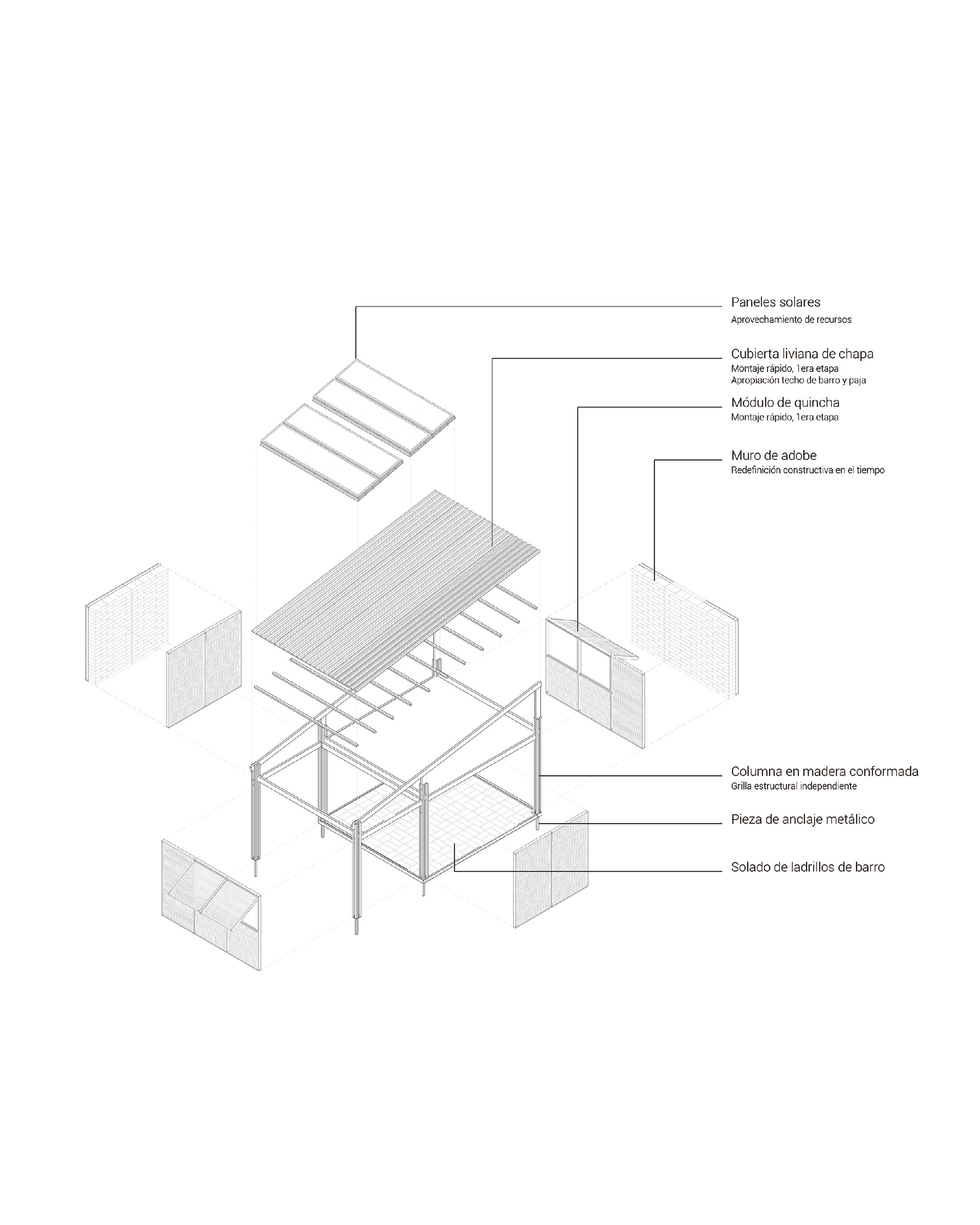
Therefore, housing cannot be deprived of the services that enable inhabitation and whose temporality extends beyond the moment of emergency. Through a structural device, this need is materially translated into social infrastructure: the set of physical spaces and organizations that shape our interactions, together with the use of one of the most energy-rich regions.
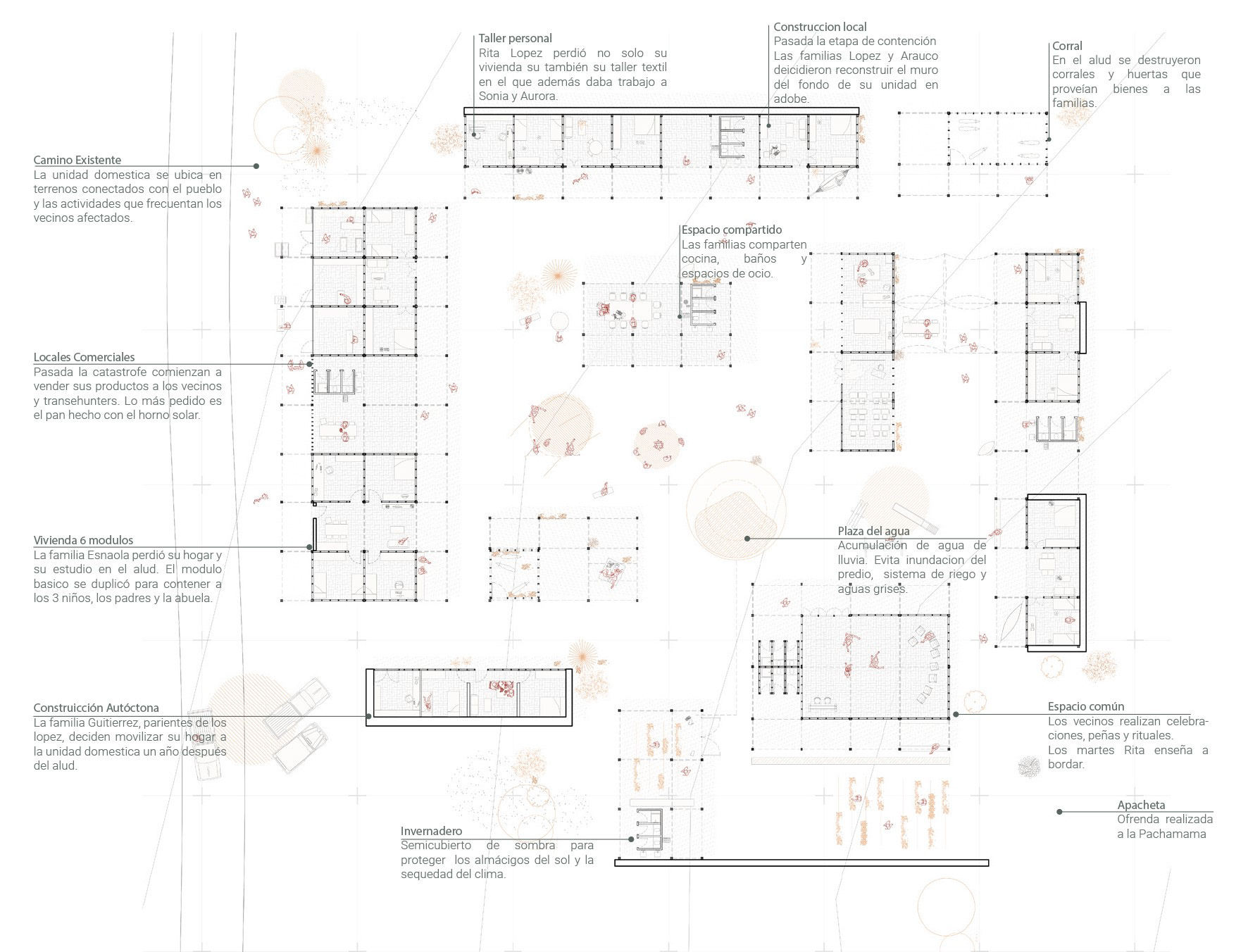
The project considers a dynamic approach, proposing to foster the creation of community relationships by introducing a rapid-response strategy that first provides shelter for the community in relation to housing, and then allows for different imaginaries of space. It highlights the agency that local communities have to intervene in a socially and symbolically charged environment. In summary, it recognizes constructive continuity and the complex social dynamics of the region.